
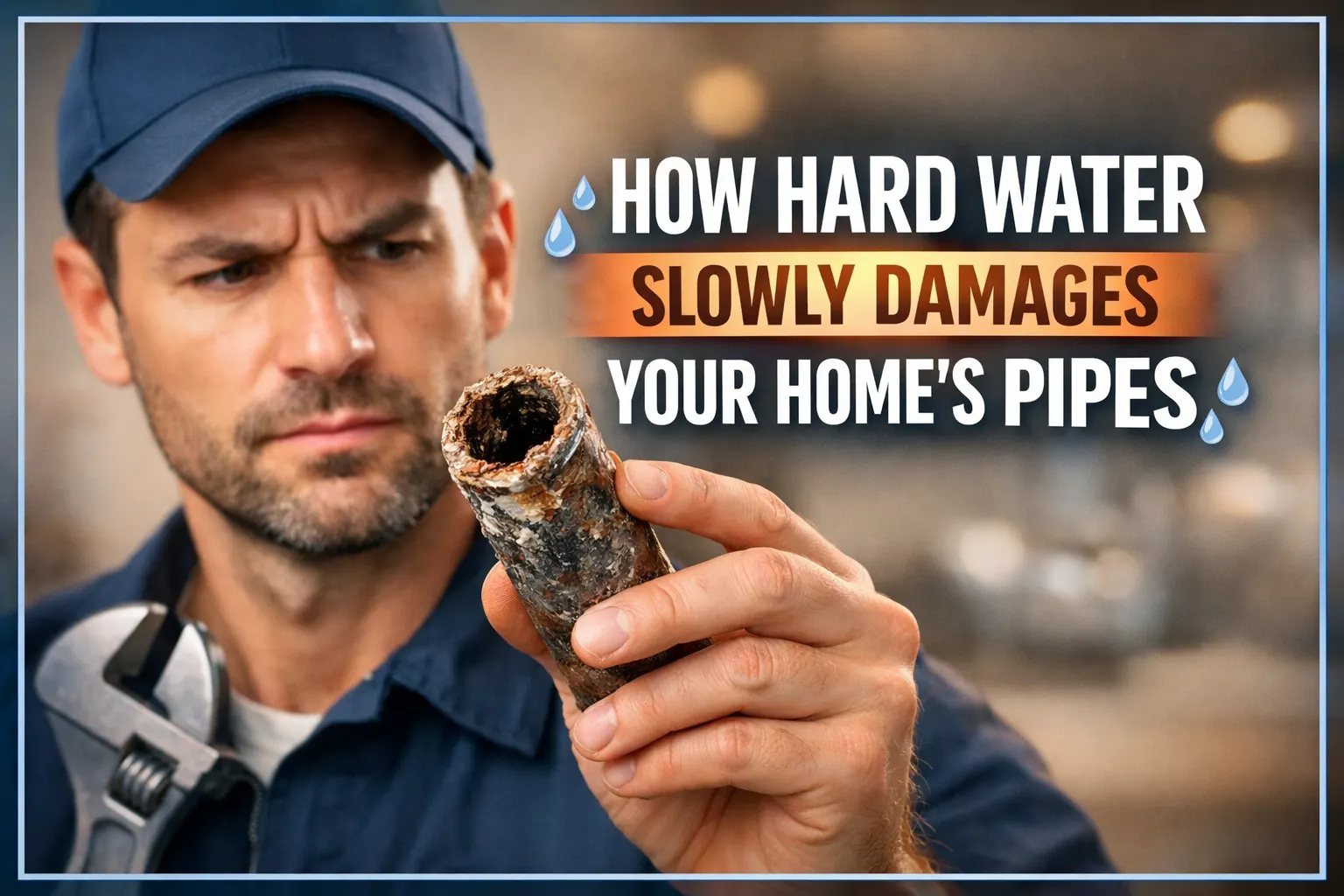
Hard water is also a household problem, and most people fail to recognize it until the problematic consequences start to take their toll. It affects plumbing systems without making much noise as time passes, resulting in expensive and uncomfortable inconveniences. Unless you pay close attention, many of the homeowners will not even notice the scope of this problem until you experience decreased water pressure or constant appliance failures.
That is why it is vital not to underestimate the danger of hard water, which is subtle yet constant enough to cause considerable damage to the home and make its functioning inefficient.
This guide will examine the formation process of hard water in the pipes, the long-term effects of the same, and the best solutions to prevent damage to the critical infrastructure in your home. When one ignores warning signs at the early stages, it may turn out to be costly, and thus, let us explore this important subject matter.
What Causes Hard Water?
Hard water is simply water that contains a high amount of minerals, mainly calcium and magnesium. As water moves through the soil, it takes these minerals naturally as it flows through the rocks and the soil. The hardness of the water is dependent on the concentration of these minerals. Areas that have limestone or chalk in the geology tend to have harder water. Although most of these minerals are not harmful when consumed, they may pose serious plumbing problems to your home plumbing system and appliances, which could require professional emergency plumbing services to resolve. In the case of hard water, you may observe soap scum, dingy laundry, or dish spots.
How Does Hard Water Build Up in Pipes?
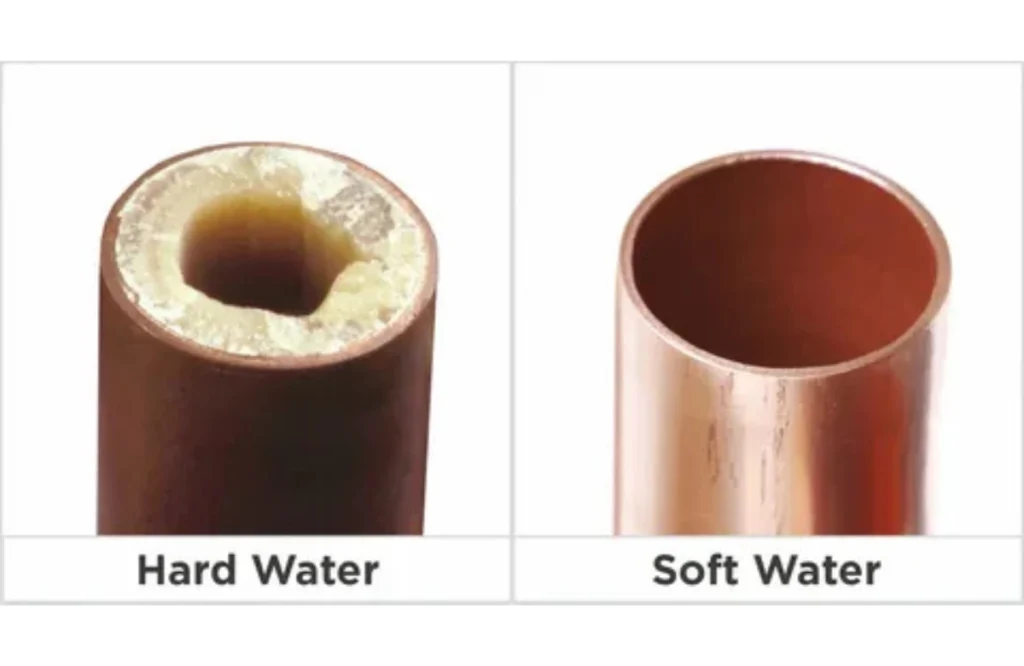
With time, dissolved minerals of calcium and magnesium are deposited back in the hard water, which could be deposited as a hard chalky matter called scale or limescale. This is usually hastened by heating water and causes hard water to be deposited in the pipes. This buildup is, after all, innocent at the beginning, but it gradually reduces the innermost part of your pipes. This inner lining not only hinders the passage of water but also makes its surface rougher, and more minerals can stick to it, worsening the predicament. Think of what the interior of an old kettle or coffee machine looks like to know this.
What Is Hard Water Removal, and Why Is It Necessary?
Hard water removal is not a simple matter of convenience; it is a necessary procedure to safeguard your plumbing system in the home and guarantee it lasts longer. Early response to the problem will help prevent additional damage to the pipe, retain the efficiency of the appliances, and eventually save money due to repair and utility bills. This is done by decreasing the minerals in your water, hence removing the source of the scale deposition. In order to have your home investment secure, it is of the utmost importance to know what this is all about. Through action, you will have cleaner water and an efficient household.
How to Select the Appropriate Hard Water Solution:
Homeowners are faced with a number of options when trying to get a solution to hard water. They are usually divided into two broad types, namely, filtration systems and softening systems. It is mainly the filtration systems that remove impurities, but they do not noticeably reduce the hardness minerals. Softening systems, on the other hand, are specifically adjusted to address calcium and magnesium. A water conditioner for hard water could be considered a solution for those who are not willing to decontaminate water but want to preserve the useful minerals. The conditioners change the structure of the minerals so that they are not adhesive but do not actually soften the water. In order to choose wisely, assess your needs and water quality.
Water Softener Systems:
The minerals that cause hardness are eliminated using a water softener system, which is an ion exchange. This entails the passage of water through a resin bed, which traps calcium and magnesium ions and substitutes them with sodium or potassium ions. This is an effective way of averting scale and covering pipes and appliances. Using a water softener for hard water, you know that only soft water will be flowing through your pipes, and so you will not get hard water accumulating in pipes. Important elements are a mineral tank, a brine tank, and a control valve to control regeneration. Salt replenishment should be done regularly to have optimum performance.
What to Consider in the Best Water Softener for Home:
There are several important features to be considered in order to choose the best water softener at home. Capacity is the quantity of grains that the system is capable of removing before it regenerates. The other factor is efficiency, which is associated with salt and water consumption during regeneration. Seek systems that have clever controls to regulate the regeneration cycles depending on the use of water. The ease of replacement of salt and changing the filters is also a factor of consideration in maintenance. The most effective way of locating the best water softener is to research well-known brands, read reviews, and consult water treatment professionals, since hard water can also contribute to low shower pressure in your home. To guarantee future satisfaction, invest in a system that can satisfy your family’s needs.
Point Solutions vs. Whole House Water Softener:
The choice of whether to install a whole-house water softener or point-of-use solutions would be based on the level of the hard water issue. A whole house system is used to treat all the incoming water to your home, concerning all the faucets, showers, and even the appliances. This is an excellent all-around method for preventing hard water deposits in the pipes in your entire plumbing system. Point solutions like showerhead filters simply treat the water at a certain outlet. They are cheaper and have minimal protection. A complete system for your house is usually cheaper and more effective for soft water for all purposes, which guarantees maximum advantage and long-lasting protection of pipes.
Advantages of Water Softener Installation:
A water softener installation in a timely manner has many advantages besides the elimination of damage to the pipes. It guards your whole plumbing framework against corrosive scale, increases the life cycle of the water-using gadgets, and improves the overall quality of water. Cleaner dishes, brighter laundry, and softer skin and hair come as a result of using soft water to boost the performance of soaps and detergents. In order to enjoy these benefits, professional plumbing installation is necessary to have the system run effectively and efficiently.
Conclusion:
Hard water is a major threat that is not well perceived and may cause a lot of damage to your home, both in plumbing and appliances. The gradual deposits of hard water in pipes may result in loss of efficiency and high repair and replacement costs. Nevertheless, it is possible to reduce these risks by taking proactive measures since homeowners are aware of the reasons and realize these risks early. Not only is investing in the correct water softener system an expense, but it is also a very important investment in the long-term well-being and functionality of your home. To safeguard your plumbing and be able to maintain a steady stream of good water, you might think of having a complete hard water system.
Independent Plumbing has been providing the best plumbing service and expert advice in Ventura County for over 25 years, offering the best water softener installation to protect homes against hard water.
FAQs:
Q1. What are the main minerals that result in hard water?
High levels of dissolved mineral salts of calcium and magnesium are the main causes of hard water. These minerals are picked up naturally as the water passes through geological formations such as limestone and chalk, and define the level of hardness of the water.
Q2. What is the impact of hard water accumulation in pipes on the pressure of water?
The presence of hard water in the pipelines results in the formation of a scale that decreases the inner pipe diameter. This narrowing limits the flow of water, which causes a significant reduction in the pressure of water at the faucets, showerheads, and other fixtures in your house.
Q3. Will hard water break my home appliances?
Hard water can be very damaging to the appliances that use water, like the water heaters, dishwashers, and washing machines. Mineral deposits may become more clogged in the internal parts and make them less productive and lower in total life, which results in premature wear-outs and increased energy usage.
Q4. What is the difference between a water softener and a conditioner?
A water softener system is used to eliminate hardness minerals (calcium and magnesium) using ion exchange. A water conditioner for hard water, however, leaves the mineral structure unchanged to inhibit the growth of scale, but does not take away the minerals of the water itself.
Q5. What do you think should be the frequency of maintenance of a water softener system?
A water softener system usually requires regular maintenance, such as adding and refilling the salt in the brine tank. Also, it would be best to adhere to the instructions of the manufacturer regarding the regular cleaning and replacement of filters to provide the highest performance of the unit and its durability.